
People ask the question as if they’re offering a warm blanket.
“Do you think everything happens for a reason?”
I understand why they ask it. We all want the universe to make sense. We want pain to fit neatly into a story whose ending redeems every ugly chapter. We want to believe that if we suffer long enough, someday we’ll discover the hidden sentence that explains it all.
For most of my life, I wanted that too.
It would have been comforting.
It would have been easier.
Instead, life handed me something far less tidy.
I was ten years old.
Ten-year-olds aren’t supposed to know what evil feels like.
They’re supposed to know the smell of freshly cut grass after Little League practice. The thrill of riding a bicycle too fast down a neighborhood hill. The sound of a screen door slamming as they race into the house for dinner. They’re supposed to believe that grown-ups can be trusted and that tomorrow will look a lot like today.
My childhood ended on an ordinary day.
Not with thunder.
Not with a warning.
Not with a dramatic soundtrack.
Just with two young men who made choices that would echo through the next half-century of my life.
People often imagine trauma as an explosion.
It isn’t.
It’s more like a quiet fracture.
The crack is almost invisible at first.
You keep walking.
You keep smiling.
You keep going to school.
But every year afterward, the fracture widens just a little more until one day you realize you’ve built your entire life around not letting anyone see where you broke.
That became me.
I didn’t tell anyone.
Not my parents.
Not my friends.
Not the church.
Not the people who loved me.
For more than thirty years, I carried a secret heavy enough to bend the spine of a child into the silence of an adult.
Thirty years.
Think about that.
Three decades of conversations that never happened.
Three decades of birthdays, graduations, promotions, weddings, sermons, and holidays while a frightened ten-year-old boy sat quietly in the back room of my heart, still waiting for someone to notice he hadn’t been okay for a very long time.
Secrets have weight.
No one talks about that.
They don’t show up on a bathroom scale, but they settle into your shoulders. They change the way you breathe. They teach your eyes to scan every room before you enter it. They convince you that if anyone knew the truth, they would somehow see you differently.
Shame is an extraordinary liar.
It whispers that what someone did to you somehow became who you are.
I believed that lie for decades.
So when someone says, “Everything happens for a reason,” I find myself returning to that little boy.
I imagine kneeling beside him.
His knees are scraped from playing outside.
His eyes don’t quite understand what has happened.
His heart is trying desperately to carry something far too large for a child.
Would I really lean over and tell him this was part of God’s plan?
Never.
Not once.
Not ever.
Because I no longer believe that God authors evil.
I believe people do.
Somewhere along the way we’ve confused God’s ability to redeem suffering with the idea that God manufactures it.
Those are profoundly different things.
One offers hope.
The other makes God resemble the very monsters we pray to be rescued from.
I cannot worship a God who needed a little boy to be raped so that one day he could become compassionate.
I don’t believe God bargains that way.
The world doesn’t work like a carefully written screenplay where every tragedy exists solely to move the plot forward.
Sometimes the villain isn’t symbolic.
Sometimes the darkness isn’t metaphorical.
Sometimes evil simply walks into the room wearing ordinary clothes.
There are moments in history that cannot be baptized into meaning.
Wars.
Genocide.
Children abandoned.
Families shattered.
Abuse hidden behind closed doors.
There is no beautiful reason for these things.
There is only the terrible reminder that human beings possess an astonishing capacity to wound one another.
We don’t like admitting that.
We prefer cleaner stories.
We like wrapping suffering in inspirational quotes because they fit neatly inside greeting cards and social media posts.
But survivors know something the rest of the world often forgets.
Not every wound has an explanation.
Some wounds simply need someone willing to sit beside them without trying to solve them.
I spent years searching for reasons.
Maybe God was teaching me.
Maybe this would make me stronger.
Maybe this would prepare me for ministry.
Maybe…
Maybe…
Maybe…
Those questions became their own prison.
Eventually I stopped asking why.
Instead, I began asking something much more difficult.
“What now?”
What do I do with a life that has been interrupted by evil?
How do I become something other than my worst memory?
How do I refuse to let another person’s violence become my identity?
Those questions changed everything.
Because the remarkable thing about human beings isn’t that we avoid being broken.
It’s that somehow we continue building lives with cracked hands.
Somewhere in those decades I became a pastor.
Not because I was assaulted.
I became a pastor because I discovered people everywhere were carrying invisible stories.
Some had lost children.
Some had buried spouses.
Some had addictions.
Some wore expensive suits while quietly contemplating suicide.
Some had secrets that had calcified into loneliness.
I recognized them.
Maybe not their stories.
But their eyes.
Pain has a particular look.
It hides behind practiced smiles.
It laughs a second too loudly.
It says, “I’m fine,” before anyone even asks.
I know that look because I wore it for years.
Later I became a writer.
Again, not because trauma somehow magically transformed into talent.
Writing became the place where silence finally surrendered.
Every sentence was another brick removed from the wall I had spent decades constructing around my heart.
Words did what secrecy never could.
They let light in.
I often think about the beaches I’ve walked since then.
The Atlantic rolling endlessly onto Florida sand.
Wave after wave arriving without applause.
The ocean never explains itself.
It simply keeps returning.
Some mornings the water is gentle enough to mirror the sunrise.
Other mornings it is violent enough to pull houses into the sea.
The same ocean.
Different day.
Life feels like that.
Beauty and brutality occupy the same shoreline.
One family is celebrating a wedding while another identifies a body.
Someone is hearing “I love you” for the first time while someone else is hearing a doctor whisper, “I’m sorry.”
Joy and grief don’t take turns.
They share the same address.
Perhaps that’s why I have stopped trying to force every tragedy into a grand design.
The older I become, the less interested I am in explanations and the more interested I am in presence.
When Jesus encountered suffering, He rarely explained it.
He touched lepers.
He wept at gravesides.
He defended the vulnerable.
He fed hungry crowds.
He stood with the abandoned.
Love was His answer long before explanation ever was.
That matters to me.
Especially now.
Romans says that all things work together for good.
It does not say all things are good.
Those are two entirely different sentences.
Rape is not good.
Abuse is not good.
Violence is not good.
Cruelty is not good.
There is nothing holy about stolen innocence.
Yet somehow—and I admit this with reverence rather than certainty—God has an astonishing way of entering places where goodness has been driven out.
Not to justify what happened.
Never that.
But to refuse to abandon us there.
That has become my faith.
Not that everything happens for a reason.
But that nothing, absolutely nothing, can prevent God from walking into the wreckage with us.
I still have scars.
Some memories arrive without invitation.
Some nights are quieter than others.
Some tears still surprise me.
Healing, I’ve learned, is less like climbing a mountain and more like walking the shoreline.
The tide comes in.
The tide goes out.
Some footprints disappear.
Others remain.
But every morning the horizon offers another sunrise anyway.
So do I think everything happens for a reason?
No.
I think sometimes little boys are hurt by people who choose evil.
I think innocent lives are changed forever.
I think the world can be unimaginably cruel.
But I also believe something that has taken me sixty years to learn.
Love is more stubborn than evil.
Grace has a longer memory than shame.
Hope survives things that should have killed it.
And perhaps redemption isn’t discovering why the darkness came.
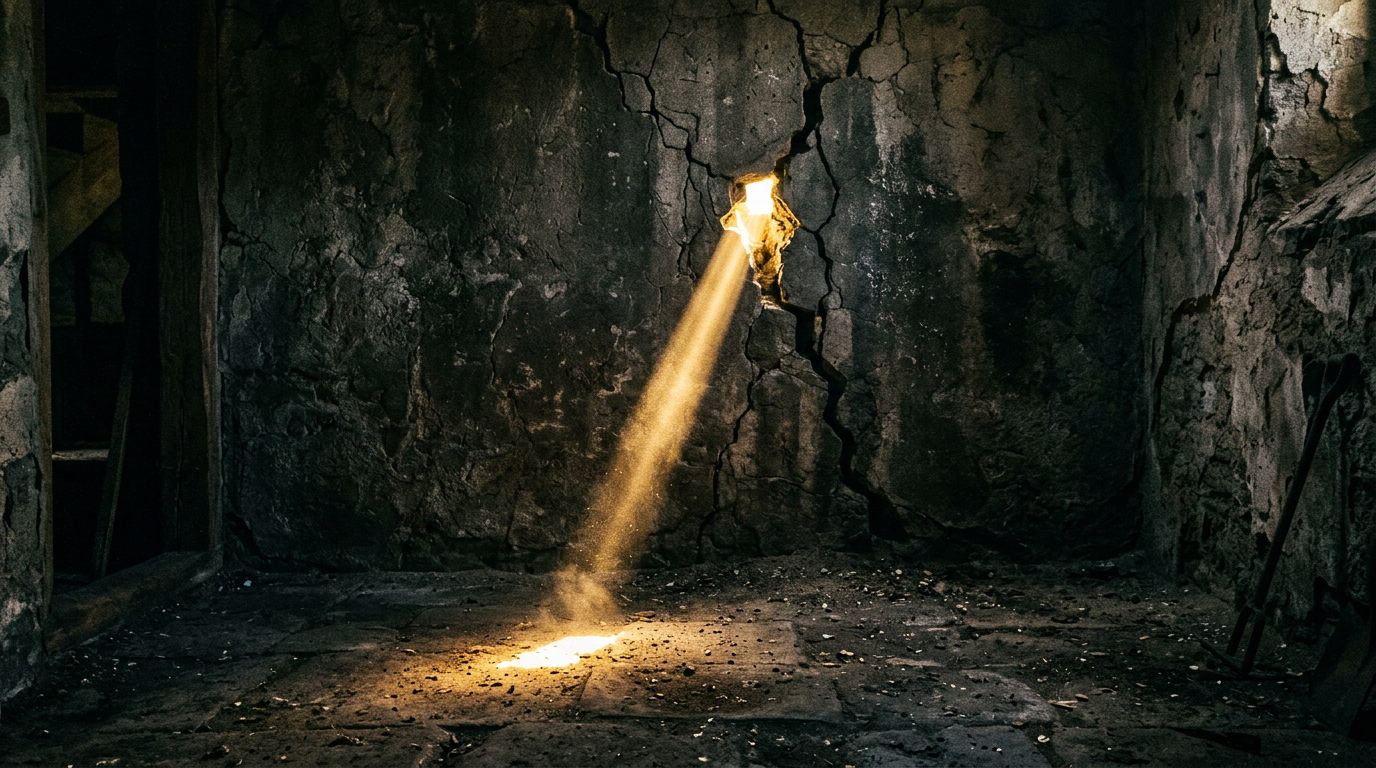
Perhaps redemption is discovering that, despite everything, the darkness never succeeded in extinguishing the light.
That frightened ten-year-old boy thought his story ended in silence.
He could never have imagined that one day he would tell it aloud.
He could never have imagined becoming a pastor who sits with broken people instead of trying to fix them.
He could never have imagined becoming a writer who believes honesty is holier than pretending.
Most of all, he could never have imagined that after carrying a secret for thirty years, he would finally discover that the opposite of shame isn’t perfection.
It’s being fully known…
…and discovering that love stays anyway.

Leave a Reply