

Conditional Lover: A Journey to Becoming Real
$5.00
Conditional Lover is the story of what happens when the cost of pretending becomes too high. From the shadows of a boyhood silenced by shame to the pulpit of a church that might not survive his truth, Dee’s journey is one of raw faith, deep loss, and unexpected resurrection. When God’s whisper called him to live fully as himself—as a transgender woman of faith—David became Dee and faced the unthinkable: losing the life he built to find the one he was meant to live.
Told with the lyrical honesty of confession and the courage of rebirth, Conditional Lover is a memoir about love that isn’t earned, faith that isn’t tidy, and the wild grace of becoming real. It’s for anyone who’s ever been loved conditionally—and dared to believe there’s more.
- Formats: EPUB
- Total download size: 1.55MB
- 1 included file
Conditional Lover, tells the story of how I discovered the truth about love only after it was withdrawn. For decades, I was David — husband, father, pastor — a man my family cherished and my congregation admired. Then I came out as transgender, and the love I had built my life upon disappeared. The family who once called me “beloved” now wants nothing to do with me. My grandchildren, who once called me “Grandpa,” now look away, undeterred by their parents. The people who claimed their love was unconditional revealed the “if” hiding in every embrace.
Conditional Lover traces the journey from that shattering to something sacred — the slow awakening to a love that can’t be earned, lost, or revoked. Told through five movements, it blends memoir, theology, and lyrical reflection, exploring how family, faith, and identity collide when truth enters the room. It’s a story for anyone who’s ever been loved until they were honest.

Love, Me: Letters I Wrote When I Wanted to Disappear
$5.00
Love, Me: Letters I Wrote When I Wanted to Disappear is a genre-defying memoir told in letters—raw, poetic, and unflinchingly honest. Through this epistolary format, author Dee Grachek invites readers into her inner world as she navigates life as a transgender woman coming out after decades of silence, shame, and survival.
At the heart of Love, Me is a radical refusal to disappear. With the voice of a pastor, a poet, and a survivor, Dee writes through the ache of rejection and the quiet beauty of becoming. Her letters chronicle not just a transition of gender, but a transformation of spirit—a reclamation of voice, faith, and belovedness.
- Formats: EPUB
- Total download size: 1.27MB
- 1 included file
Love, Me: Letters I Wrote When I Wanted to Disappear is a genre-defying memoir told in letters—raw, poetic, and unflinchingly honest. Through this epistolary format, author Dee Grachek invites readers into her inner world as she navigates life as a transgender woman coming out after decades of silence, shame, and survival. These are not just personal reflections—they are mirrors for readers who have wrestled with their own identity, faith, grief, or longing to be seen.
Love, Me: Letters I Wrote When I Wanted to Disappear is a genre-defying memoir told in letters—raw, poetic, and unflinchingly honest.

The Letter I Wrote Myself
$5.00
At twenty-five, David appears to have it all: a promising career as a stockbroker, a polished image, a carefully curated life of success. But beneath the surface lies suffocating silence — an identity hidden, a truth buried. Everything shifts when a mysterious letter arrives, written in his own handwriting, signed by someone he has never dared to be: Ava. The letter dares him to imagine a different life, to step out of the closet he has built, to live authentically.
The arrival of the letter sets off a journey of shattering and becoming. At first, David wrestles in silence, reading and rereading the letter, haunted by hallucinated dialogues with an older self. The closet feels safe but unbearable. In a chapel, alone and trembling, he whispers the words that break everything open: “I am Ava.”
- Formats: EPUB
- Total download size: 1.24MB
- 1 included file
At twenty-five, David appears to have it all: a promising career as a stockbroker, a polished image, a carefully curated life of success. But beneath the surface lies suffocating silence — an identity hidden, a truth buried. Everything shifts when a mysterious letter arrives, written in his own handwriting, signed by someone he has never dared to be: Ava. The letter dares him to imagine a different life, to step out of the closet he has built, to live authentically.
The arrival of the letter sets off a journey of shattering and becoming. At first, David wrestles in silence, reading and rereading the letter, haunted by hallucinated dialogues with an older self. The closet feels safe but unbearable. In a chapel, alone and trembling, he whispers the words that break everything open: “I am Ava.”
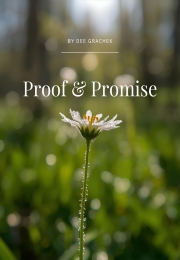
Proof & Promise
$5.00
Claire Bennett keeps a ledger, turns her plant east, and asks for things in writing. Two years out of college, she opens Proof & Promise, a modest advisory office that becomes the locus of a quiet scandal when a prestigious firm starts “streamlining” accounts off the books. With Daniel Hale—a features reporter who writes toward her, not over her—and a chorus of working-class allies (a typist, a janitor, a copier tech, a locksmith, and an auditor from Kearney), Claire helps the state build a case that privileges process over pyrotechnics. As a full tape surfaces and a city adopts simple reforms (record meetings, preserve tapes, notify participants), Claire and Daniel build a tender, domestic romance out of verbs: ask, note, keep. The result is an upmarket love
- Formats: EPUB
- Total download size: 757.90KB
- 1 included file
Claire Bennett keeps a ledger, turns her plant east, and asks for things in writing. Two years out of college, she opens Proof & Promise, a modest advisory office that becomes the locus of a quiet scandal when a prestigious firm starts “streamlining” accounts off the books. With Daniel Hale—a features reporter who writes toward her, not over her—and a chorus of working-class allies (a typist, a janitor, a copier tech, a locksmith, and an auditor from Kearney), Claire helps the state build a case that privileges process over pyrotechnics. As a full tape surfaces and a city adopts simple reforms (record meetings, preserve tapes, notify participants), Claire and Daniel build a tender, domestic romance out of verbs: ask, note, keep. The result is an upmarket love

At the edge of the water sits a house that no one advertises, yet somehow the right people always find it—the ones who have lost everything they thought defined them.
Inside Harbor House, Elliot joins a small group of residents, each carrying secrets they’ve spent years avoiding. As their stories unfold through quiet, interconnected moments, the house itself becomes a catalyst for truth—forcing each of them to confront identity, faith, grief, and the cost of living a life that isn’t their own. But Harbor House has one unspoken rule: no one stays forever.
As Elliot begins to rediscover a version of faith that is less about certainty and more about presence, he must decide whether he has the courage to leave the safety of the house and live honestly in a world that once rejected him.
Written in a lyrical, introspective voice, Safe Harbor explores themes of identity, belonging, spiritual reconstruction, and the quiet, radical act of becoming. It will resonate with readers navigating their own questions of authenticity, especially within the intersections of faith and self.

There is a question I have been asked a thousand times.
In boardrooms. In sanctuaries. At dinner tables where the wine had gone warm and the conversation had finally gotten honest. Across desks and podiums and kitchen counters. In hospital waiting rooms and green rooms and the particular nowhere of a long flight where the stranger next to you decides that altitude makes them brave. In the dark, in the quiet, in the specific silence that falls after everyone else has gone to sleep and you are alone with the hum of a house that holds you but does not quite know you.
Who are you? For most of my life, I had an answer.
Several, actually. Stacked like credentials. Like armor. Like the carefully chosen layers of someone who learned early that the question is never really just a question, but an audition. A sorting mechanism. A way of finding out whether you belong in this room or should find a different one. So you prepare. You learn which version of yourself travels well. You learn which names land and which ones you keep quiet, tucked away somewhere interior, visited only in the in-between moments that don’t make it into anyone’s story about you.
Each one true. Each one earned. Each one a door I walked through deliberately, purposefully, and kept walking through until the motion became automatic, until it felt less like a choice and more like weather. Just the way things were. The shape of a life. My life.

I want to write a new book about the painful thoughts of suicide. I don’t want to commit suicide, but I want to write about the pain and anguish I am feeling, which could likely lead to suicide. I titled the book “Unwanted”. It’s about both feeling unwanted for coming out queer late in life and then not wanting the painful feelings that go along with that.
I approached Unwanted to understand that the book is not actually about death. It is about what happens to a human soul when love, belonging, identity, faith, family, and selfhood collide hard enough to make someone wonder if disappearing would hurt less than continuing.
That distinction matters.
Readers who will need this book most are not necessarily looking for a book about suicide. They are looking for someone who finally tells the truth about what it feels like to become emotionally homeless while still alive.
I wrote this book because my life contains tensions many people never see held together in one person: a pastor, a parent, a grandfather, a former executive, a believer, a queer person coming out late in life, someone deeply loved in some spaces and painfully questioned in others.
That combination creates emotional terrain that many people live in silently. The title Unwanted carries at least four meanings simultaneously: Feeling unwanted by family, church, culture, or community. Feeling unwanted by yourself. Wanting the pain to stop. Feeling like your authentic self is treated as an unwanted thing
That layered meaning is what makes the title emotionally dangerous in the best literary sense.
I would not the structure of this book as a “mental health book.” I would structure it as a literary memoir/spiritual memoir written in a Love-filled voice. Quiet. Honest. Intimate. Confessional. Not clinical.
The central question of the book is not:
“Will I survive?”
The central question is:
“Can a person remain alive after becoming visible?”

Ten-year-old Oliver Callahan wants one thing this summer: a perfect game. A pitcher who tracks every pitch in a green notebook, he believes enough preparation can make him untouchable. His mother Meagan, his grandfather Bud, and his catcher Dani anchor him, while rival pitcher Marcus Wheeler becomes his measuring stick.
But Oliver’s need for control unravels him. He shakes off Dani’s calls, throws pitches fear picks instead of trust, and nearly loses his closest friendship. Coach Reyes, confessing why he never made the majors, gives Oliver the truth he needs: the figuring out takes as long as it takes. Bud teaches the same lesson from his truck hood, the next pitch matters more than the last one.
In the summer’s final game, Oliver throws his perfect game, but the real victory is smaller: learning that loving something and needing it to be flawless are not the same thing at all.

A man who has spent his life staying contained, efficient, unseen, walks into Common Ground, a small coffee shop that does not announce itself, meaning to stay only long enough for a cup of coffee. He has recently ended his engagement to a woman who deserved more than he could give her, and he is still learning what that means. He returns the next day, then the next, drawn back by Leo behind the counter, by Rhea holding the room without controlling it, by unguarded laughter he does not yet know how to join.
Slowly, through shared cake, open mic nights, and the steady, grounded presence of a regular named Micah, he stops watching belonging from a distance and starts living inside it. Six months later he is behind the counter himself, sitting close enough that his knee brushes Micah’s without either of them noticing. Joy, he learns, is not an event. It is a life you stay inside.

I wrote this for my grandchildren.
In a forest of green trees, Liora stands out with bark of shimmering purple. The other trees mock her, so she tries to shrink, dim, and conform, growing quiet and gray rather than herself. When wildfire threatens the forest, it is Liora’s difference, her purple lavender mist, that cools the flames and saves everyone. The trees who once mocked her now see her bravery and truth. Far away, a child named Ava, discovering her own true self, recognizes Liora’s story as her own. A gentle picture book about transgender and different children learning that what makes them stand apart is what lets them shine.

Pastor and theologian Dee Grachek argues that the gospel was never meant to exclude anyone, and that the church’s line-drawing around queer people and others deemed unacceptable is a distortion of Christ, not a faithful reading of him. Moving through five parts, the book traces a full arc: the faith that once made sense before it broke down under the weight of what it demanded; the suffocating cost of surviving inside a church that required disappearance rather than authenticity; a sustained sit in “Holy Saturday,” the sacred silence between the death of an old faith and whatever resurrection might come next; and finally, resurrection itself, understood not as a return to what was, but as the rebirth of authenticity and a theology large enough to hold everyone.
Grachek writes as both pastor and queer person who spent years learning to disappear and years more learning to come back. Scripture does the dismantling throughout, prophetic tradition, psalms, gospels, and Paul’s letters recast against institutional religion’s failures. The book’s aim is not tolerance or inclusion but reclamation: the insistence that no one was ever actually outside the gospel to begin with.