
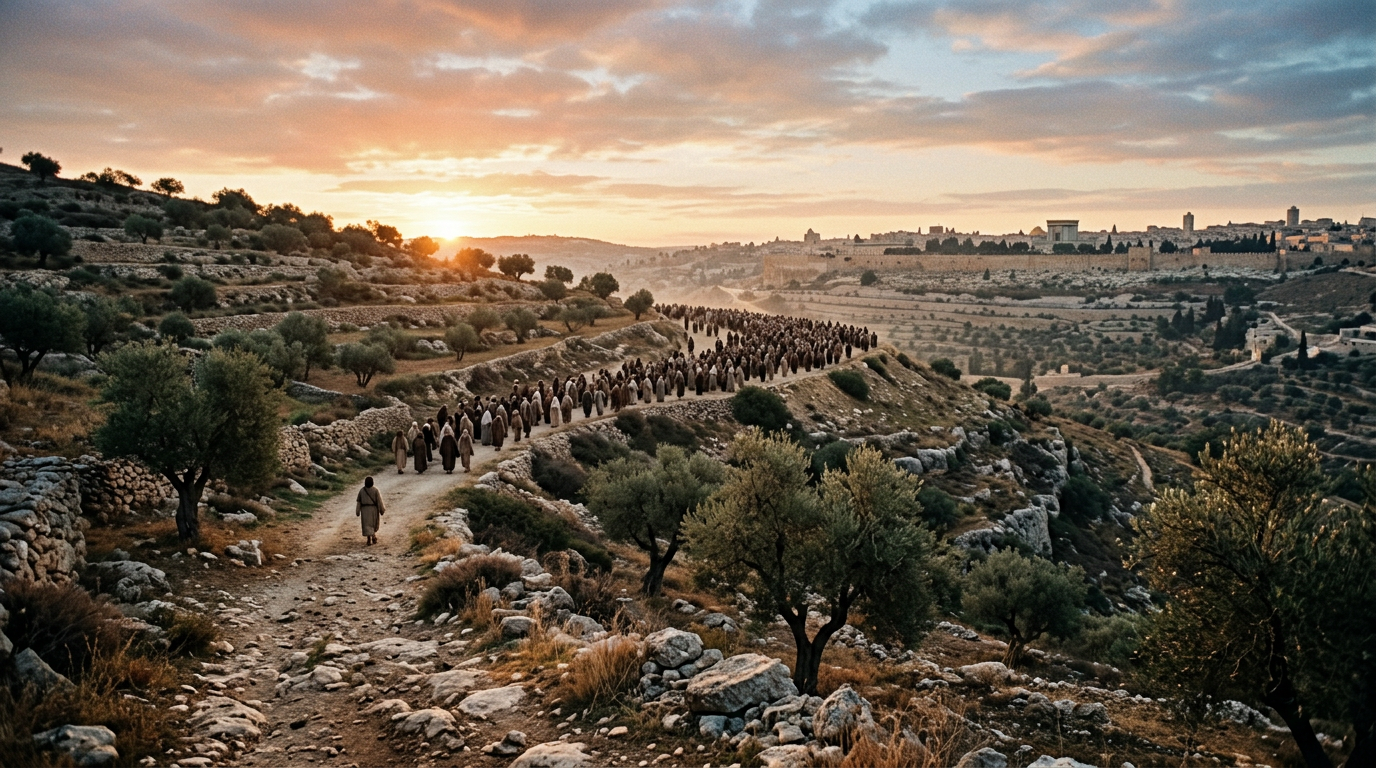


If I could go back and witness any event in history, I would not choose the signing of the Declaration of Independence, the first steps on the moon, or the coronation of a monarch. I would travel to an unnamed hillside in Galilee and take my place among the crowd as Jesus taught what we now call the Sermon on the Mount.
I would not go merely to confirm that it happened. I would go because I want to hear his voice.
For two thousand years, the words of Jesus have passed through translators, theologians, preachers, denominations, and institutions. They have been printed in red ink, carved into stone, embroidered onto banners, and quoted from pulpits. Some people have used them to liberate. Others have used them to control. Too often, the church has surrounded the simple way of Jesus with rules, doctrines, exclusions, and threats that sound nothing like the man who welcomed those whom respectable society rejected.
I would want to hear his tone when he said, “Blessed are the poor in spirit.”
Did his voice soften when he spoke of those who mourn? Did he pause before promising that the meek would inherit the earth? Did anger rise within him when he spoke of those who hunger and thirst for justice? Did he look directly at the people whom religion had pushed aside when he called the merciful, the peacemakers, and the persecuted blessed?
Most of all, I would want to see the crowd.
I would look for the people standing at its edges—the ones uncertain whether they were truly welcome. I would notice the woman whose history had become her identity in the minds of others. I would look for the person whose body did not fit society’s expectations, the person whose family had rejected them, the person religious leaders had declared unclean. I would watch Jesus’s eyes to see whether he noticed them.
I believe he did.
Perhaps that is why I would choose this moment. I have spent much of my life trying to distinguish the voice of Jesus from the voices of those who claim to speak for him. I have heard religious people place conditions upon love. I have watched theology become a weapon against LGBTQ people. I have experienced what happens when the church becomes more concerned with protecting its certainty than loving the person standing before it.
But on that hillside, there would be no cathedral, no denomination, no committee deciding who belonged. There would be no doctrinal examination at the entrance. There would only be Jesus, an open sky, and a gathering of ordinary people hungry for hope.
I would listen as he spoke about loving enemies, forgiving others, refusing hypocrisy, and treating people as we wish to be treated. I would hear him describe a life shaped not by domination but by mercy. I would watch him offer a vision of God’s realm that belonged especially to those who had been told they possessed nothing.
And perhaps I would finally hear what centuries of religion have sometimes made difficult to hear: Jesus was not building a system of exclusion. He was showing us a way of life.
I would not interrupt him. I would not ask him to settle every theological argument the church would eventually create. I would simply sit in the grass and let his words reach me before anyone had the opportunity to explain what they were supposed to mean.
When he finished, I imagine the crowd slowly dispersing. Some people would return home comforted. Others would leave unsettled because his teaching threatened the hierarchies that gave them power. And some—perhaps the people who had spent their entire lives believing God disapproved of them—would walk away standing a little taller.
Before returning to my own time, I would want one brief moment with him. I would want Jesus to look at me—not at the person others expected me to remain, not at the identity assigned to me, and not at the theological controversy some people might try to make of my life. I would want him to see me as I am.
I think I already know what I would find in his face.
Not disgust.
Not disappointment.
Not condemnation.
Recognition.
I would return carrying no new doctrine and no secret revelation. I would bring back something much simpler and far more powerful: the certainty that the gospel was always meant to free people, that love was never supposed to come with fine print, and that God did not make me to hate me.
Of all the moments in history I might witness, I would choose the hillside because I would want to encounter Jesus before Christianity became an institution. I would want to hear, with my own ears, the invitation beneath everything he said:
You are blessed. You are beloved. Now go and help others know that they are beloved too.

Leave a Reply