
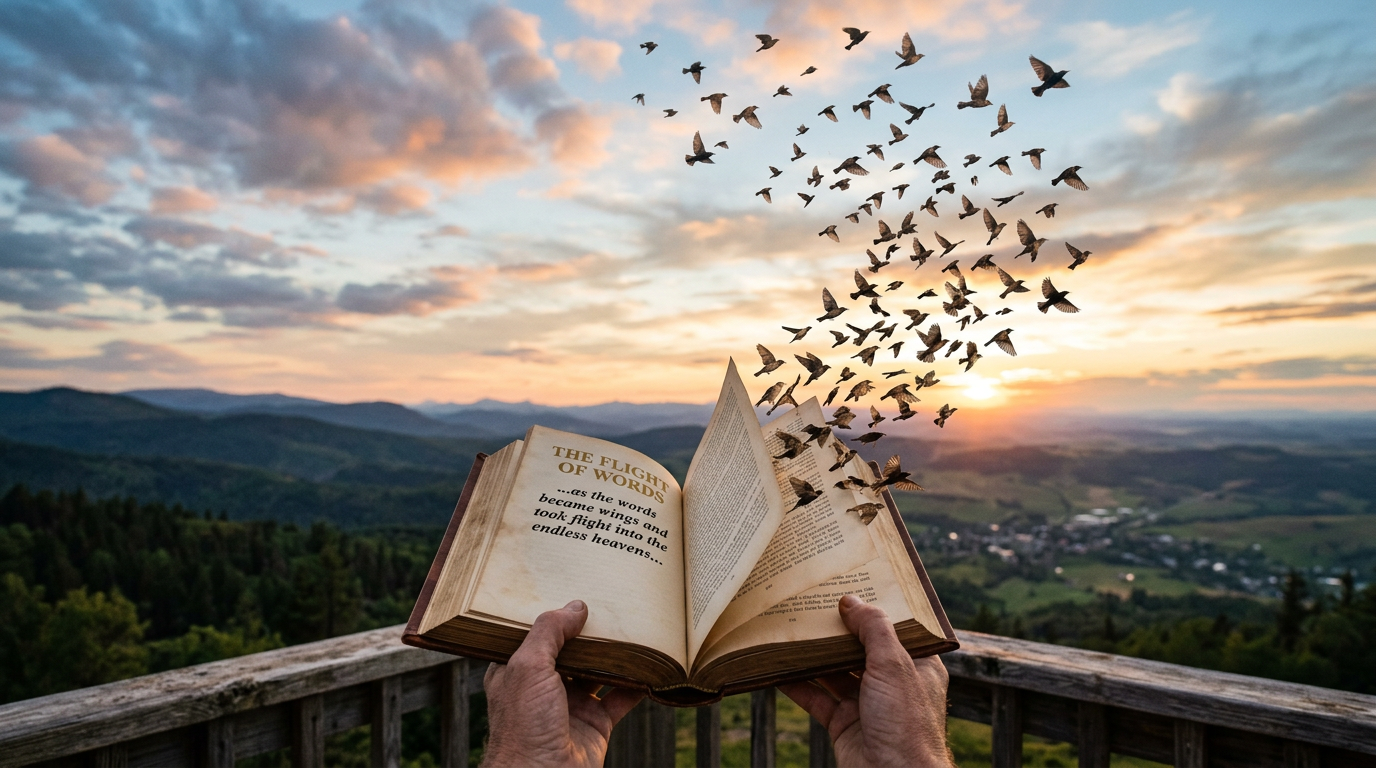
If there is one thing I hope people remember about me, it won’t be that I was a pastor.
It won’t be that I wrote books or preached sermons or chaired committees or led churches through difficult seasons.
I hope they remember that I never stopped learning.
That may sound like an odd thing to say after a lifetime in ministry. People often assume pastors have answers. Congregations don’t usually call someone because they have the best questions. They call someone they believe can offer wisdom, certainty, and direction.
For years, I tried to be that person.
I studied hard in seminary. I learned biblical languages. I immersed myself in theology, church history, ethics, and pastoral care. I read commentaries by scholars far wiser than I could ever hope to be. Even after graduation, I kept reading because I believed that if I was going to stand behind a pulpit and say, “This is what God is saying,” I owed people the humility of having done my homework.
But I eventually discovered something seminary never taught me.
Learning isn’t something you finish.
It becomes the way you live.
That realization changed everything.
Looking back now, I think I’ve always been curious. Even before ministry, during nearly two decades in banking and investments, I wanted to understand why markets behaved the way they did and why people made the financial decisions they made. When I entered ministry in my forties, that curiosity simply found a different direction. Instead of balance sheets, I studied Scripture. Instead of economic systems, I tried to understand the human heart. Instead of asking why investors feared uncertainty, I asked why people struggled to believe they were loved by God.
The questions changed.
The curiosity never did.
Then life handed me the greatest lesson I would ever receive.
I came out.
People often imagine that coming out happens in a single conversation. They picture someone saying the words aloud, and everything changes overnight.
That wasn’t my experience.
Coming out was the end of a lifetime of learning who I really was.
For decades, I had become very good at being the person everyone expected me to be. I was a husband, a father, an investment banker, a pastor, a preacher, a presbytery leader. Those identities were real. I loved my family. I loved serving the church. None of it was fake.
But underneath all of those roles was a truth I had spent decades trying not to understand.
I wasn’t lying to other people nearly as much as I was lying to myself.
When that truth finally surfaced, it didn’t simply ask me to change my wardrobe or my name. It asked me to question almost everything I thought I knew.
That was terrifying.
For the first time in my life, theology was no longer theoretical.
It was personal.
Scripture wasn’t just something I preached on Sunday morning.
It was the difference between believing God loved me exactly as I was or believing I had somehow become God’s disappointment.
I could not settle for easy answers.
I had to learn.
So I went back to the beginning.
I reread passages I had preached dozens of times. I opened books written by people I agreed with and books written by people I didn’t. I studied the original languages again. I explored history, science, psychology, gender studies, and the experiences of Christians whose stories had rarely been welcomed inside the church.
Some people assumed I was searching for permission.
I wasn’t.
I was searching for truth.
There’s a difference.
If I had discovered that becoming my authentic self meant walking away from Christ, I honestly don’t know what I would have done. My faith has never been a career. It has always been the deepest part of who I am. Even in my darkest moments—even when I have been angry with God, disappointed with the church, or exhausted by rejection—I have never stopped believing that Jesus is worth following.
So I kept learning.
And the more I learned, the more surprised I became.
I discovered that many of the things I had assumed were settled weren’t nearly as settled as I had believed. I found faithful Christians who loved Scripture as deeply as I did yet understood difficult passages differently. I learned that history is more complicated than simple slogans. I discovered how culture shapes interpretation. Most of all, I found that the closer I looked at Jesus, the harder it became to imagine him turning away people who were simply trying to live truthfully.
Learning did not pull me away from Christ.
It brought me closer.
That may be the greatest irony of my life.
Some people think coming out caused me to abandon my faith.
The opposite is true.
It forced me to take my faith more seriously than ever before.
I could no longer borrow someone else’s theology.
I had to wrestle with God myself.
Jacob wrestled through the night and limped away with both a blessing and a wound. In many ways, I understand that story now better than I ever did as a young pastor. Real faith isn’t afraid of difficult questions. Real faith is willing to hold onto God until daylight comes, even if the struggle leaves us changed.
My journey has left me changed.
It has also left me much humbler.
These days, I find myself listening more than talking. I enjoy conversations with people who disagree with me because they often reveal blind spots I didn’t know I had. Sometimes they strengthen my convictions. Sometimes they change them. Either outcome is a gift if it leads me closer to truth.
I’ve also become convinced that learning is an act of love.
Every book I read is an opportunity to understand another human being.
Every conversation is a chance to see the world through someone else’s eyes.
Every historical discovery reminds me that Christians have been learning—and sometimes unlearning—for two thousand years.
The church has changed before.
It will change again.
I hope I never become the person who says, “I’ve learned enough.”
That sentence sounds dangerously close to saying, “God has nothing left to teach me.”
I don’t believe that’s true.
Not for me.
Not for the church.
Not for anyone.
Today, I still read theology almost every day. I also read neuroscience, psychology, history, economics, biographies, novels, and poetry. I learn from photographers whose images reveal beauty I would have walked past. I learn from scientists whose discoveries deepen my awe of creation. I learn from young people who see possibilities my generation often overlooked. I learn from older saints whose quiet faith has survived losses I can barely imagine.
And perhaps most surprisingly, I have learned from people who rejected me after I came out.
They have taught me about grief.
About fear.
About how difficult change can be.
About the limits of conditional love.
But they have also taught me something about grace.
Grace is not merely forgiving those who hurt us.
Grace is refusing to stop believing that people can keep learning.
If I believe God never gave up on teaching me, how can I give up on anyone else?
That hope has become one of the anchors of my life.
When I stand in a pulpit today, I no longer imagine myself as the expert in the room.
I imagine myself as another disciple.
The English word “disciple” has accumulated centuries of religious meaning, but at its heart it simply describes someone who learns from a teacher. Every time I remember that, I smile.
After all these years…
After a career in finance…
After seminary…
After hundreds of sermons…
After countless meetings…
After heartbreak…
After coming out…
After discovering that authenticity sometimes comes at a tremendous cost…
I am still exactly that.
A disciple.
A student.
Still reading.
Still asking.
Still wondering.
Still growing.
Still believing that every honest question can become another doorway into the heart of God.
If I have learned anything over the course of my life, it is this: faith is not the possession of perfect answers. Faith is trusting that God is big enough to meet us in every sincere question. The God who called Abraham into the unknown, who patiently taught the disciples despite their misunderstandings, and who met me again when I finally became honest about who I was, is not threatened by curiosity.
That is why I will never stop learning.
Because every page I turn, every conversation I enter, every assumption I challenge, and every new truth I discover has brought me to the same place.
Not farther from God.
But deeper into the mystery of God’s astonishing, relentless love.

Leave a Reply